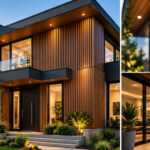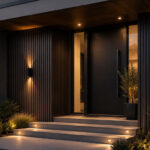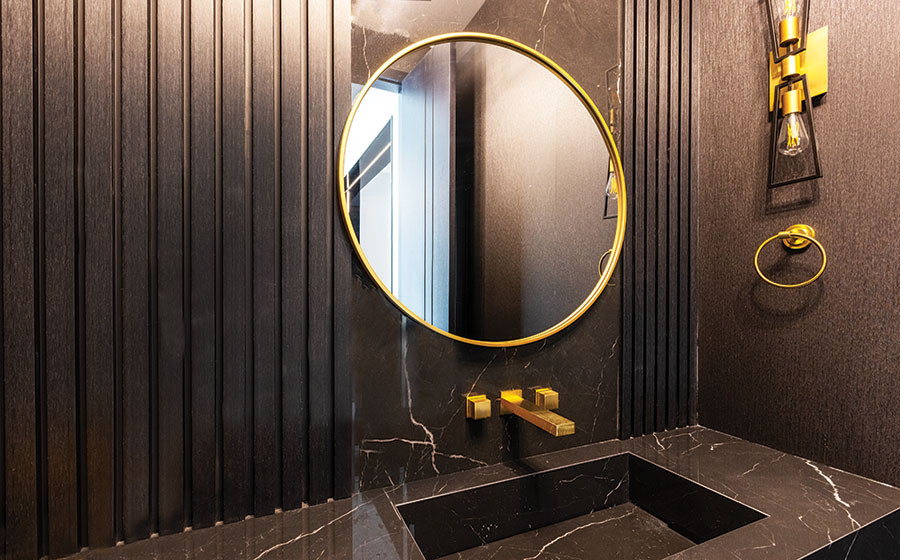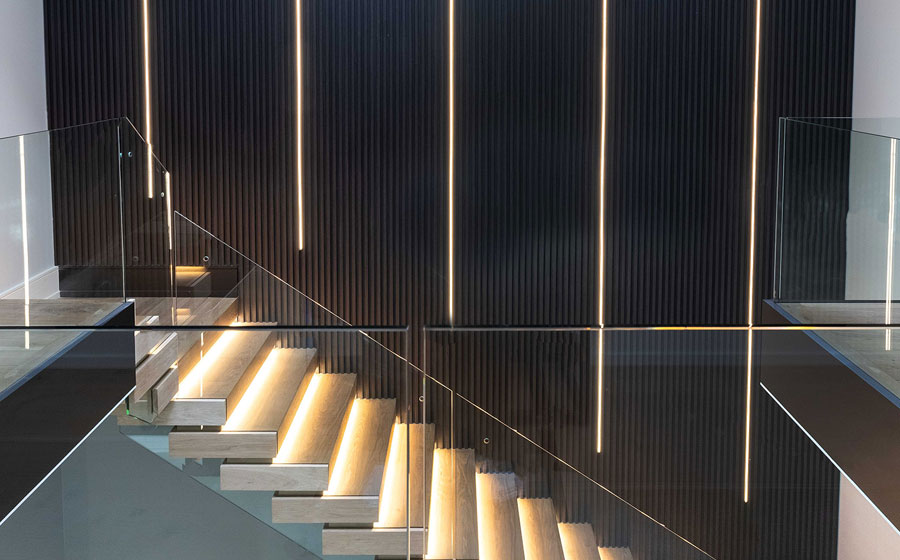
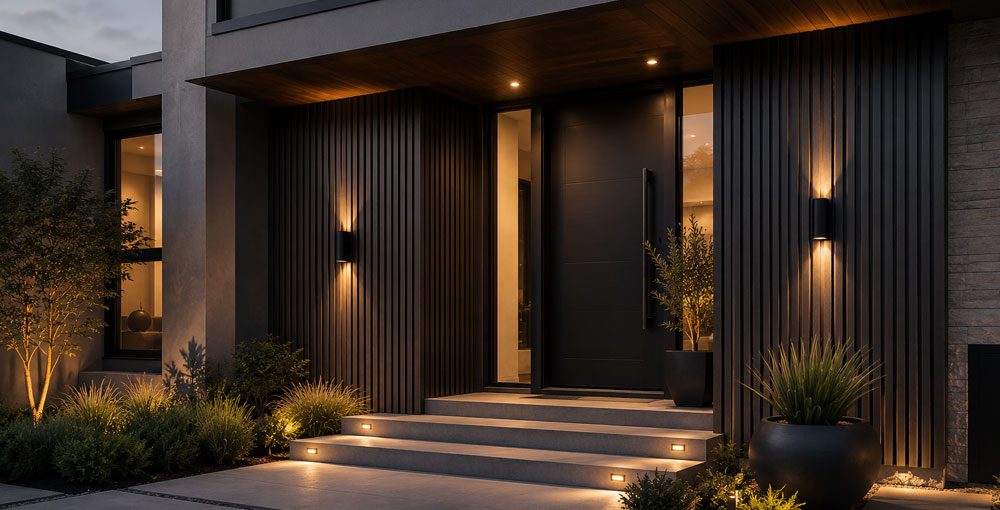
The entrance of a home does more than provide access. It establishes the architectural identity of the entire property. In contemporary residential design, entrances are increasingly treated as carefully composed spaces where materials, proportions, lighting, landscaping, and architectural details work together to create a memorable first impression. WPC fluted panels are particularly well suited to this approach because their linear profiles introduce texture and visual rhythm without overwhelming a clean modern façade. Available in wood-inspired tones, greys, charcoal, and other contemporary finishes, these panels can frame a doorway, emphasize an entrance volume, or create a distinctive feature wall. Their combination of modern aesthetics and practical performance makes them an attractive option for designers and homeowners seeking an entrance that feels sophisticated, welcoming, and visually connected to the rest of the residence.
Creating a Strong Architectural Focal Point
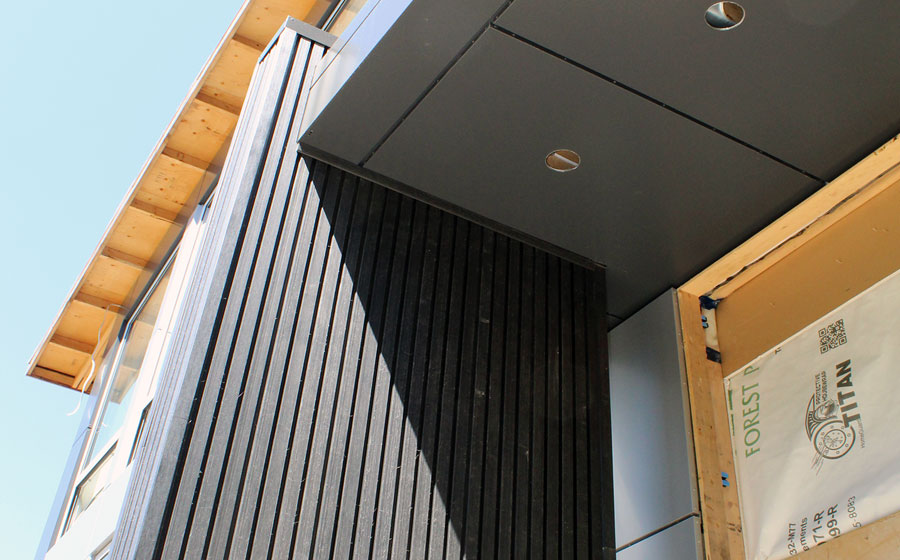
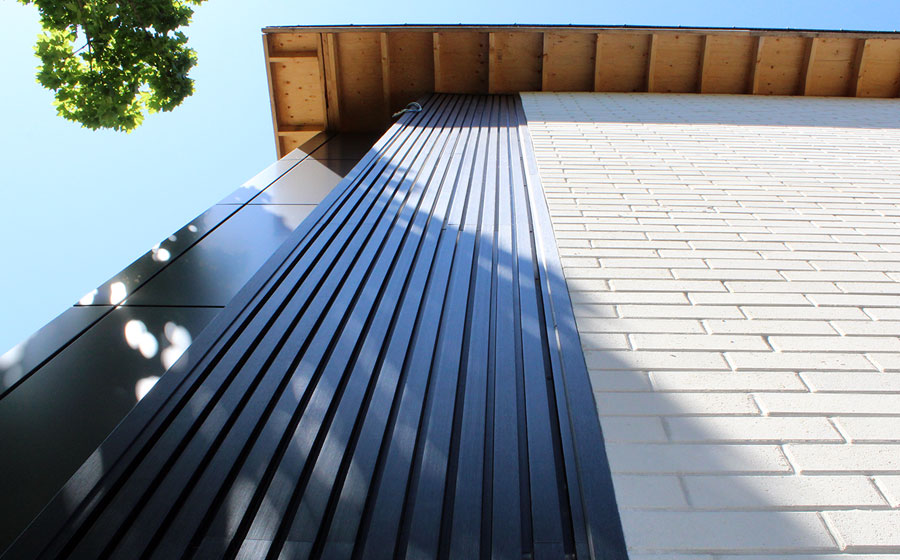
A successful entrance should be immediately recognizable without appearing disconnected from the building around it. WPC fluted panels can help establish this focal point by creating contrast between the entrance and surrounding materials. Vertical installation is especially effective around tall doors and recessed entrances because the continuous lines naturally draw the eye upward, emphasizing height and giving the space a more dramatic architectural presence. Rather than covering the entire façade, designers can strategically apply fluted panels around the doorway, along an entrance column, or across a projecting architectural volume. Charcoal panels can create striking contrast against light concrete or stone, while warmer wood finishes can soften minimalist architecture. The objective is not simply to add another material, but to use texture and repetition to clearly define the entrance.
Combining WPC with Complementary Materials
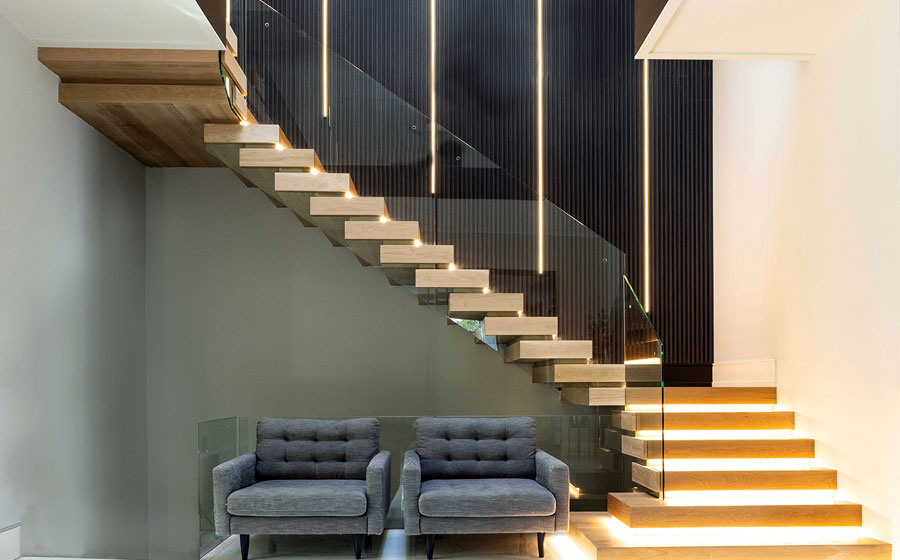
Modern entrances become more interesting when materials are layered thoughtfully. WPC fluted panels work particularly well alongside glass, stone, concrete, metal, and smooth stucco because their textured surfaces provide contrast to flatter architectural finishes. A charcoal fluted wall beside a large glass entrance, for example, can create a sophisticated composition while black metal frames reinforce the contemporary character. Alternatively, wood-toned WPC can introduce warmth when combined with grey stone or concrete. Material selection should remain disciplined: too many competing finishes can make an entrance appear visually busy. Repeating the WPC finish elsewhere—perhaps on a garage surround, privacy screen, soffit, or another façade detail—can also establish continuity and make the entrance feel like an integrated part of the overall architectural concept.
Using Lighting and Landscaping to Enhance Texture
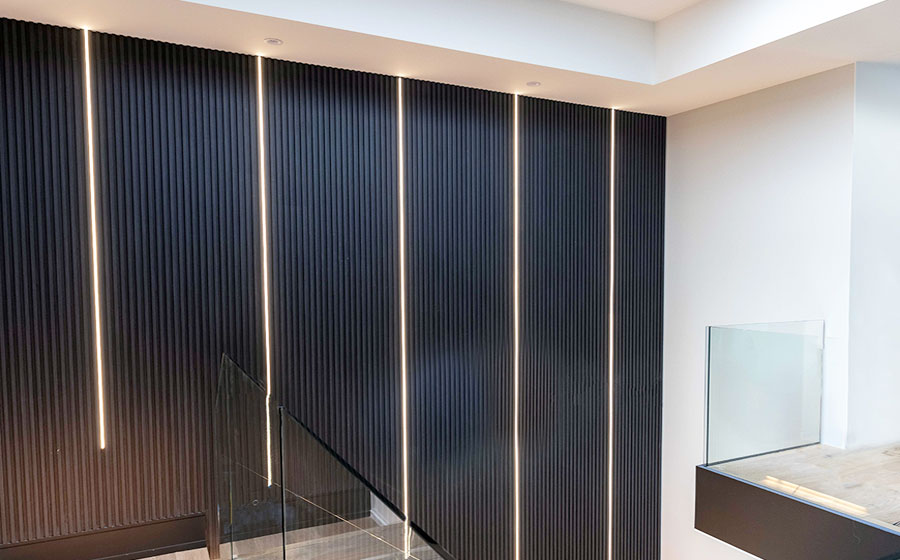
Lighting is one of the most effective ways to emphasize the distinctive profile of fluted panels. Wall-mounted fixtures, concealed lighting, or carefully positioned downlights can cast subtle shadows along the grooves, revealing depth and texture that may appear more understated during daylight. This effect can make a WPC-clad entrance especially impressive in the evening. Landscaping should support rather than compete with the architecture. Simple planters, ornamental grasses, low shrubs, natural stone, and restrained pathway planting can soften the transition between the building and its surroundings. Together, architectural lighting and landscaping transform the entrance from a purely functional doorway into a complete arrival experience. The result is a space that remains visually appealing throughout the day while becoming warmer and more dramatic after sunset.
Conclusion:
A memorable modern entrance is created through balance rather than excessive decoration. WPC fluted panels offer designers an effective way to introduce architectural texture, define important areas, and establish a strong visual identity while maintaining the clean lines associated with contemporary design. Their versatility allows them to complement numerous materials and architectural styles, while their durability and low-maintenance characteristics make them particularly practical for exterior applications. Whether used to frame a front door, emphasize a vertical feature, or connect the entrance with other exterior elements, WPC panels can become an important part of a cohesive façade. When combined thoughtfully with lighting, landscaping, glass, stone, and complementary finishes, fluted panels help transform an ordinary entrance into a sophisticated architectural statement that welcomes visitors and enhances the overall character of the home.
Keywords: WPC fluted panels, modern entrance design, WPC wall panels, exterior cladding, architectural façade, charcoal WPC panels, contemporary home design, architectural lighting, exterior feature wall, WPC exterior panels