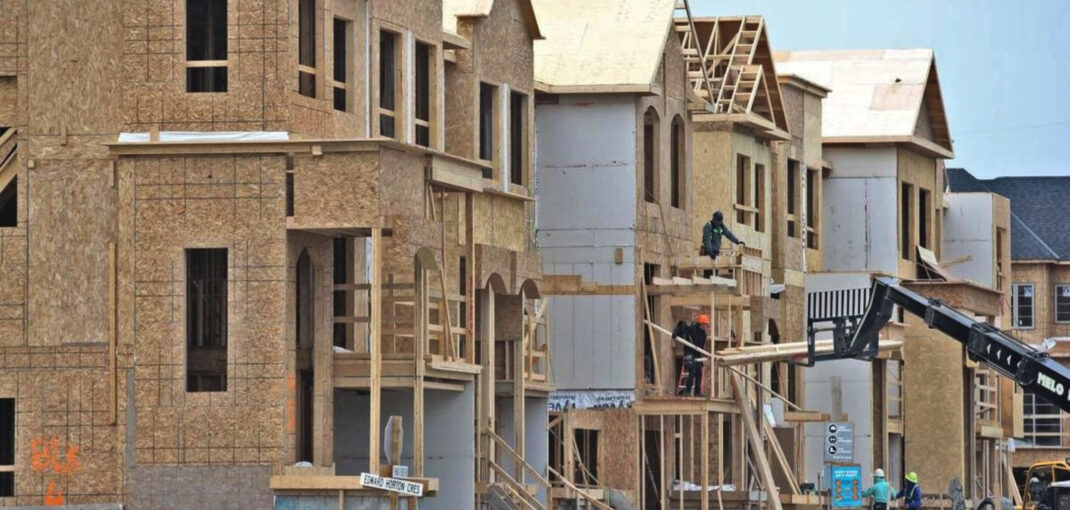
In the first half of 2025, Ontario experienced a sharp decline in home construction, with only 27,368 new housing starts. This figure represents a 25% drop from the same period in 2024 and a 35% decrease from 2023 levels, falling even below the pandemic – affected numbers of early 2020. This slowdown underscores a persistent trend, as annual housing starts from 2022 to 2024 averaged a mere 86,650 — far short of the 150,000 needed annually to meet the province’s 2031 target.
As Canada’s most populous province, Ontario’s housing struggles have national ripple effects, driving up prices in other regions, pushing workers away from economic hubs like Toronto, and exacerbating household debt. This leaves Canadians increasingly financially vulnerable to future economic challenges.
Despite billions in taxpayer funding allocated to boost construction, Ontario’s housing supply remains stagnant. The Ford government’s 2025 budget added $400 million to the Housing-Enabling Water Systems Fund and the Municipal Housing Infrastructure Program—part of a broader $2 billion commitment through 2027. An additional $325 million is being spent over seven years on a joint waterfront revitalization project with the federal government and the City of Toronto. Yet, these investments are contributing to growing provincial debt while having a minimal impact on actual homebuilding.
While housing affordability is shaped by both supply and demand, Ontario has limited influence over federal immigration policies that drive population growth. However, the factors it can control — zoning, approval timelines, and development fees — remain bogged down by outdated policies and red tape. The province has refused to implement key recommendations from its own Housing Affordability Task Force, such as allowing fourplexes as-of-right on residential lots. Meanwhile, developers in Toronto and Hamilton face some of the longest approval delays and highest upfront costs in the country, discouraging new construction at a time when it is most critical.
If Ontario is serious about addressing the housing crisis, it must start by removing the barriers within its control. Streamlining approval processes, reducing fees, and adopting more flexible zoning rules are essential to unlocking new supply. The consequences of inaction extend beyond provincial borders: Ontario’s housing shortage exacerbates affordability nationwide by displacing demand and driving up prices across Canada.
Keywords: Ontario, housing crisis, homebuilding, housing starts, affordability, construction, Ford government, zoning, approval delays, development fees, supply, demand, Toronto, population growth, immigration policy, provincial debt, taxpayer funding, economic impact, Housing Affordability Task Force, fourplexes
Source: Commentary – Faser Institute